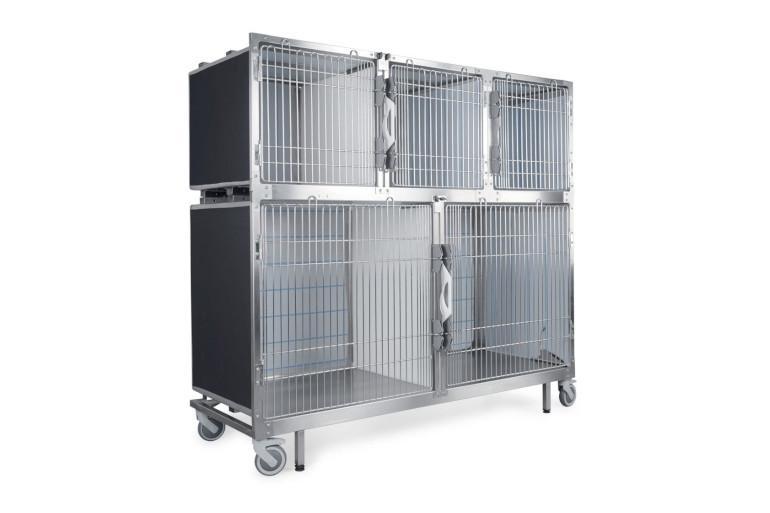
Learn how to choose the best veterinary hospitalization cages, explore different types, and understand the importance of materials for safety and hygiene.
Veterinary hospitalization cages are a central element in clinical management, especially in situations involving recovery, observation, or isolation.
More than simple containment, they are a space for recovery and monitoring.
The Role of Cages in the Clinical Environment
During hospitalization, animals are in a vulnerable state. The space where they stay must ensure:
- Safety;
- Comfort;
- Hygiene;
- Stability.
Inadequate cages can increase stress and compromise recovery.
Types of Veterinary Cages
- Modular Cages
Allow adaptation to the available space and clinic growth.
- Hospital Cages
Designed for prolonged hospitalization and monitoring.
- Isolation Cages
Used in cases of contagious diseases.
Each type should be selected according to its clinical function.
Materials: Why Stainless Steel Is Essential
Material is one of the most important factors.
Stainless steel cages offer:
- High resistance;
- Easy cleaning;
- Hygienic properties;
- Long durability.
Compared to other materials, they degrade faster and are harder to sanitize.
Selection Criteria
- Ventilation
Should allow proper air circulation.
- Safety
Secure locking systems and resistant structure.
- Ease of Cleaning
Accessible surfaces with no residue accumulation.
- Comfort
Adequate space and stability.
Impact on Animal Recovery
Well-designed cages allow:
- Reduced stress;
- Better rest;
- Faster recovery;
- Effective monitoring.
They are an extension of the treatment.
Integration into the Clinical Space
Cages should be integrated into the clinic layout.
A well-designed veterinary clinic ensures:
- Easy access;
- Good visibility;
- Efficient workflows.
Veterinary hospitalization cages are a critical element in clinical practice.
Choosing the right solution improves animal welfare and clinical efficiency.
PNH Vet develops stainless steel veterinary hospital cages tailored to the real needs of clinics.
GO BACK


